
Food delivery app development is one of the most active corners of the mobile market right now. The online food delivery market is no longer the shiny new thing it was five years ago. It’s infrastructure. It’s how millions of people eat every week. And for businesses that haven’t built their own platform yet, the cost of waiting is becoming harder to justify.
According to Statista, global online food delivery revenue is on track to hit $1.54 trillion by 2026, growing at a CAGR of 7.2% through 2030. DoorDash controls 56% of the U.S. market, Uber Eats holds 23%, but the fragmented middle (regional players, niche verticals, restaurant chains, and ghost kitchens) represents a massive opportunity that nobody has fully captured.
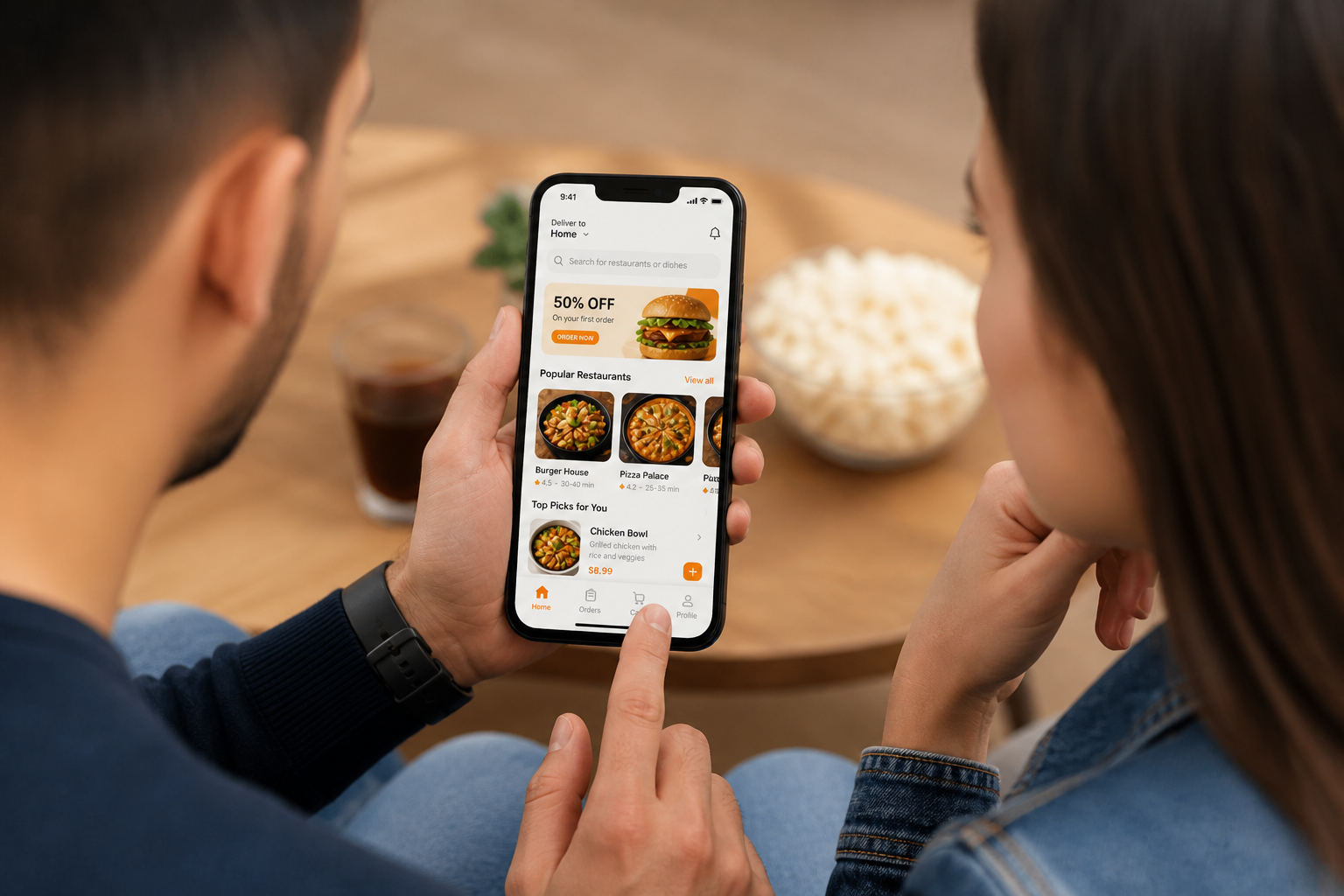
This guide is for anyone who’s serious about building a food delivery app in 2026. If you are a restaurant chain tired of paying 25% commission to third-party platforms, a startup founder targeting hyperlocal markets, or an entrepreneur building delivery experiences for underserved verticals, we’ll cover the full picture and how to approach development without burning budget on the wrong decisions.
What’s Driving the Food Delivery Market in 2026
A few structural shifts have changed the food delivery landscape recently, and they matter for how you build.
Ghost kitchens are now mainstream.
Delivery-only virtual restaurants operating without a physical dining room now account for a significant share of takeaway market growth. If you’re building for or competing with ghost kitchens, your platform needs to handle multi-brand inventory management from day one.
Third-party platform fees are eating into margins.
Aggregator commissions typically run 15–30% per order. Many restaurants on DoorDash or Uber Eats operate at thin or negative margins on delivery. Owning your platform means owning your customer relationship — and keeping more revenue per order.
AI is becoming a real differentiator.
Personalized menu recommendations based on order history and weather patterns, demand forecasting for kitchen inventory, and AI-powered route optimization are moving from premium features to baseline expectations on competitive platforms.
“A restaurant spending 25% of every delivery order on platform fees is, effectively, subsidizing a competitor. The math rarely works in their favor. A custom app changes that equation entirely.”
Business Models: Pick the Right One Before You Write a Line of Code
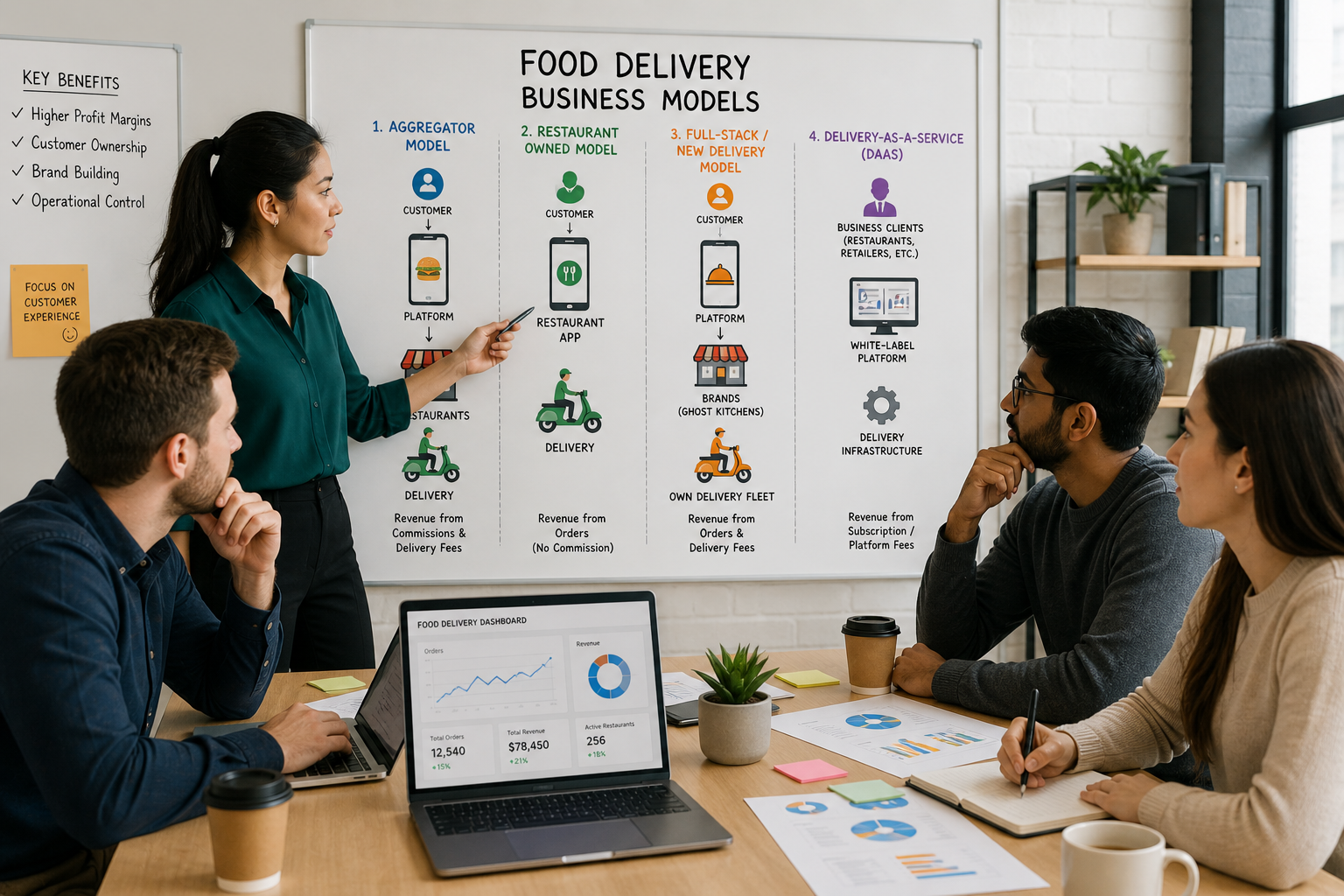
Your business model determines everything about how your app is built, the number of user panels, the revenue logic, the operational complexity. This decision comes first.
Aggregator Model
This is the Uber Eats / DoorDash approach. Your platform lists multiple restaurants, handles the customer relationship, and manages delivery. Revenue comes from restaurant commissions (15–30%) and delivery fees charged to customers. Major advantage: you’re not tied to any single restaurant’s capacity. The hard part: you need restaurant supply and consumer demand at the same time, which makes cold-start challenging.
Restaurant-Owned Model
A single restaurant or chain builds its own branded delivery app. Think Domino’s or McDonald’s mobile ordering. You own 100% of the customer relationship, collect first-party data, and eliminate aggregator fees. The tradeoff is that you handle your own delivery logistics, either through an in-house fleet, third-party driver APIs (like DoorDash Drive or Uber Direct), or a hybrid approach.
Full-Stack / New Delivery Model
Your platform manages its own restaurant brands alongside a dedicated delivery fleet. Revenue per order is higher, but so is operational complexity. This model works well for ghost kitchen operators managing multiple virtual brands from a single location.
Delivery-as-a-Service (DaaS)
You provide white-label delivery infrastructure to businesses that want delivery capability without building it themselves. High B2B revenue potential, complex technical requirements, and typically longer sales cycles. This is a platform play, not a consumer product.
The Four Components Every Type of Food Delivery App Needs
A fully functional food delivery app has four interconnected applications, each designed for a different user group. Understanding the scope of each component is essential for accurate budgeting.
Customer App
The face of your platform. Needs to be fast, visually clean, and frictionless from browse to checkout. This is where conversion lives or dies.
Restaurant Panel
Operational heart of the platform. Restaurants manage menus, accept orders, and track delivery performance without any technical expertise required.
Driver App
A clean, distraction-free interface designed for on-road use. Route navigation, order management, and earnings tracking need to work under pressure.
Admin Dashboard
Your control center. Gives platform operators visibility across order volumes, driver performance, revenue analytics, and fraud detection.
Key Features of Food Ordering Apps Per Panel
Customer App Features
- User registration via email, phone, or social login with OTP verification.
- Restaurant browsing with filters (cuisine type, dietary preferences, distance, ratings).
- Menu display with item customization (add-ons, portion sizes, special notes)
- Real-time GPS order tracking with accurate delivery ETAs.
- Multiple payment methods: cards, digital wallets, and cash on delivery.
- Push notifications for order status updates and promotional offers.
- Order history with one-tap reorder functionality.
- Ratings, reviews, and in-app customer support.
- Loyalty points, referral programs, and promo code redemption.
Restaurant Panel Features
- Menu management: bulk uploads, pricing updates, and item availability toggles.
- Real-time order notifications with accept/reject/counter workflow.
- Order history and performance analytics (sales by period, popular items, peak hours).
- Inventory management with low-stock alerts.
- Promotion creation tools (flash sales, discount codes, combo deals).
- Payout tracking and commission statement downloads.
- POS system integration for existing restaurant operations.
Driver App Features
- Order acceptance with route navigation via Google Maps or Mapbox.
- Real-time earnings tracker with daily and weekly breakdowns.
- Delivery status updates: picked up, en route, delivered.
- Customer contact via masked phone number or in-app chat.
- Driver identity verification and document onboarding.
- Availability toggle and shift scheduling.
Admin Dashboard Features
- Unified user management for customers, drivers, and restaurant partners.
- Order tracking, dispute resolution, and refund processing.
- Commission structures, payout scheduling, and financial reporting.
- Real-time analytics: order volumes, delivery times, revenue breakdown.
- Fraud detection flags and account suspension tools.
- Promotional campaign management and push notification broadcasts.
Tech Stack: What Food Delivery Applications Run On in 2026
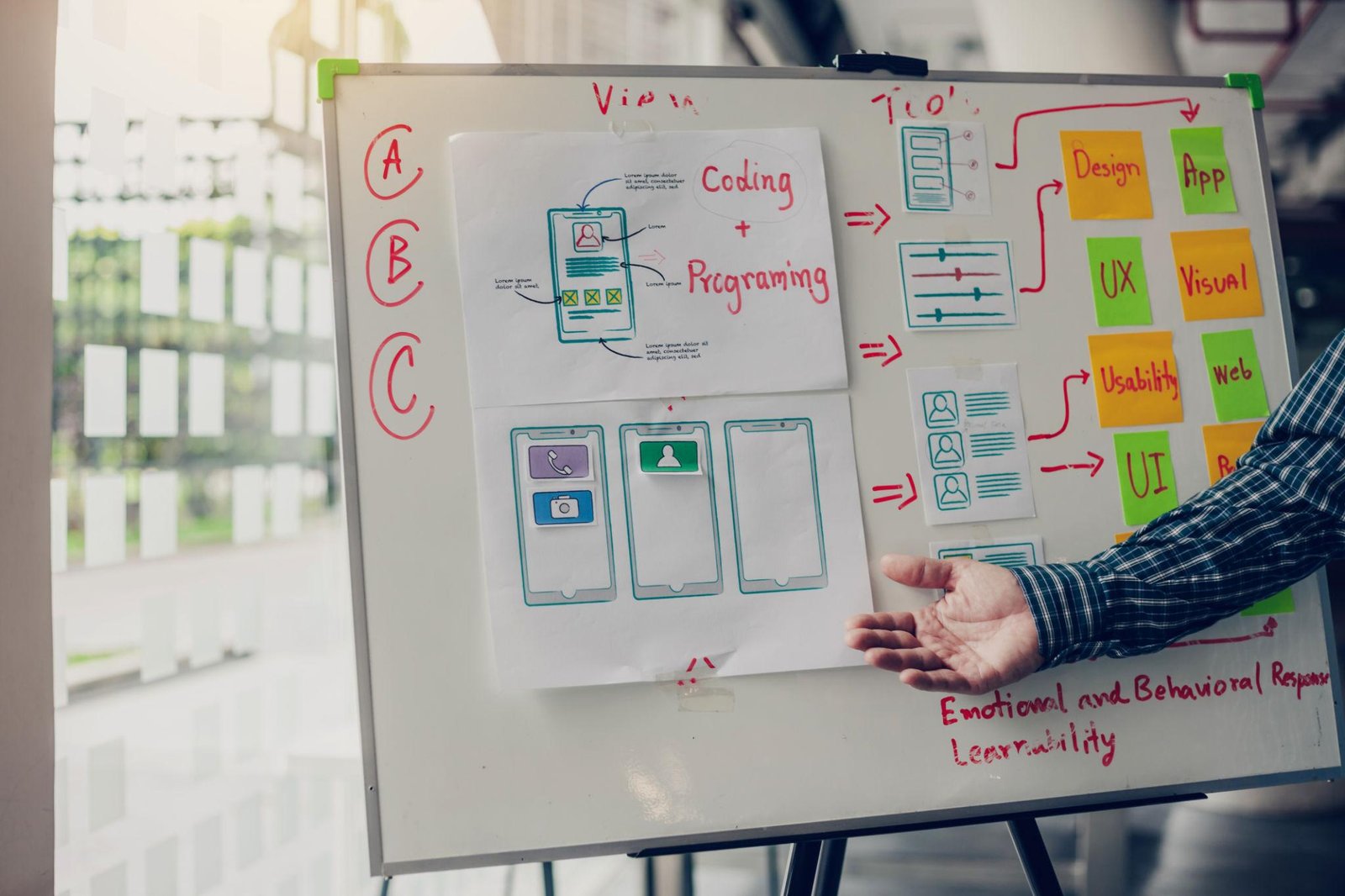
The technology choices you make early lock in your architecture for years. Here’s what solid food delivery platforms are built on right now.
| Category | Technology / Tools |
|---|---|
| Mobile (cross-platform development) | React Native or Flutter |
| Mobile (native iOS) | Swift / SwiftUI |
| Mobile (native Android) | Kotlin |
| Backend | Node.js (Express) or Python (Django / FastAPI) |
| Primary database | PostgreSQL |
| Caching layer | Redis |
| Real-time updates | WebSockets or Firebase Realtime Database |
| Maps & routing | Google Maps API or Mapbox |
| Payments | Stripe, PayPal, or Braintree |
| Push notifications | Firebase Cloud Messaging (FCM) |
| Cloud hosting | AWS or Google Cloud Platform |
| AI / ML features | TensorFlow, AWS SageMaker |
Cross-platform vs native for food ordering app development
For most food delivery apps, React Native or Flutter is the right call. A single codebase for iOS and Android cuts development time by roughly 30–40% without meaningful performance tradeoffs for this category of app. If you need hardware-level features such as biometric authentication and ARKit overlays, native food delivery app development may be worth the additional investment.
Cost of Food Delivery App Development in 2026
This is the first question most clients ask. It deserves an honest answer, not a chart with conveniently round numbers and vague disclaimers.
Basic / MVP ($20K–$55K)
Customer app + basic restaurant portal. Core ordering, single payment gateway, basic GPS tracking. Single platform (or cross-platform MVP). No dedicated driver app.
Mid-Level App Development Cost ($55K–$130K)
It includes all four components: customer app, restaurant panel, driver app, and admin dashboard. Real-time GPS, multiple payment methods, push notifications, analytics, promo codes.
Enterprise / Full Platform ($130K–$300K)
Everything in mid-level, plus AI-powered recommendations, demand forecasting, multi-city support, dynamic pricing, advanced BI dashboards, and custom POS/ERP integrations.
What Drives the Cost of Developing a Food Delivery App
- Team location is the biggest variable. North American development teams typically charge $100–$180/hour. Eastern European teams run $50–$90/hour. South Asian teams charge $25–$50/hour. Many North American businesses now use a hybrid model to balance quality and budget.
- Number of user roles. Each panel is essentially a separate application. Every role you add increases scope. A customer-only MVP development is dramatically cheaper than a four-panel platform.
- Third-party API costs. Google Maps API, Stripe transaction fees, push notification services (Firebase), and SMS verification (via Twilio) all add ongoing operational costs that don’t show up in your development quote. Build these into your financial model early.
- AI features add cost upfront but pay off over time. A solid recommendation engine adds roughly $10,000–$20,000 to the build. Platforms using AI-driven personalization typically see measurable lifts in average order value and reorder frequency within the first six months post-launch.
- QA and testing always gets cut first and regretted most. Budget 15–25% of your total development cost for testing. On an $80,000 platform, that means setting aside $12,000–$20,000 specifically for QA.
Common Mistakes That Kill Food Delivery App Projects
Skipping the MVP approach.
Building every essential feature at once burns through budgets and delays launch by months. Ship the core ordering experience, gather real user feedback, then expand. The features users never asked for are the ones that kill projects.
Underestimating driver app complexity.
The driver interface looks simple on the surface. Route optimization, real-time order assignment, and earnings calculation are technically demanding. Poor execution here leads to driver churn, which destroys delivery reliability.
Ignoring the operational cost model.
The app is one expense. Server costs, API fees, customer support, and driver incentives are the others. Build those numbers into your financial model before writing a line of code.
Choosing a development team with no marketplace experience.
A team that’s never built a multi-sided platform won’t understand the complexity of coordinating simultaneous requests across customer, restaurant, and driver. Ask specifically for examples of similar projects before signing anything.
Frequently Asked Questions
How much does it cost to build an app for food delivery like Uber Eats?
A focused MVP with core ordering, basic tracking and a single payment option typically costs $40,000 to $70,000. A full platform with customer, restaurant, driver and admin panels and advanced features runs $70,000 to $120,000 or more. A platform with capabilities comparable to Uber Eats costs well beyond that and is built in phases. Most businesses start with an MVP, validate demand, then build from there.
How long does it take to develop a successful food delivery app?
The timeline depends entirely on the application development scope. A basic MVP takes 3–5 months. A full platform with all four panels (customer, restaurant, driver, admin) and advanced features typically takes 6–10 months. Add AI-driven core features or complex integrations and you’re looking at 10–14 months. Once your specifications and wireframes are approved, we commit to a guaranteed delivery timeline in the contract.
Should I build a native app or use React Native / Flutter?
For most Canadian food delivery projects, cross-platform frameworks (React Native or Flutter) are the right call. They reduce development costs by 30–40% compared to building separate native apps for iOS and Android, without meaningful performance tradeoffs for this category. Native development makes sense if you need deep hardware integration or advanced AR features.
Can I launch with a white-label solution first?
Yes. White-label platforms cost 40–60% less than custom builds and can go live in weeks rather than months. The tradeoffs are limited customization options and ongoing licensing fees. Many businesses validate food delivery industry demand with a white-label solution before investing in a full custom build.
What are the ongoing costs after launch?
Budget 15–20% of your initial development cost annually for maintenance, server costs, and updates. On an $80,000 platform, expect $12,000–$16,000 per year. Additionally, Google Maps API, payment gateway transaction fees (typically 2–3% per transaction), and push notification services all add variable monthly costs as your order volume grows.
Do I need separate apps for customers, restaurants, and drivers?
For a proper multi-sided marketplace, yes. Each user type has fundamentally different needs and workflows. A customer browsing menus needs a completely different interface than a driver navigating routes or a restaurant manager tracking kitchen workflow.
Can you give me a fixed price and a guaranteed timeline for my food delivery app?
Yes. If you already have specifications and wireframes, we quote a fixed price and a guaranteed delivery timeline from them at no charge. If you don’t, our Discovery Phase creates them first. It starts from $2,500, is priced at cost, and you own everything it produces.
Where the Opportunity Actually Is
The food market is competitive, but it’s not closed. The dominant platforms have won the mass market. The next wave of growth is in niche verticals, regional markets, restaurant-owned apps reclaiming margins from aggregators, and ghost kitchen operators who need purpose-built platforms built around their specific workflows.
The businesses that move in 2026 with a clear model and a well-built product will have a real head start. The ones waiting for the “right time” are watching it pass.
If you’re weighing the build decision right now, start with a conversation. As a leading food delivery app development company, our team at Paracon can give you an honest cost estimate and a realistic development timeline before you commit to anything.