
SaaS vs Custom Software Development: Which Is Right for Your Small Business?
Most small businesses get a project management tool, a CRM, an invoicing platform, and some reporting software. They pay for all of it every month. And yet, somehow, their team is still spending hours moving data between those tools, building Excel workarounds, and doing things “the long way” because none of the tools actually integrate with each other the way the business actually works.
At some point, almost every growing small business hits the same wall. The off-the-shelf tools that got you started begin to feel like they’re running your business instead of the other way around.
That’s usually the moment when you question, should we keep patching together SaaS tools, or is it time to build something custom?
It’s a question we hear a lot at Paracon. And honestly, there’s no one-size-fits-all answer. But there is a right answer for your situation. This post answers what SaaS and custom software mean, the costs of each, and provides a clear decision framework to help you choose.
What is SaaS (Software-As-A-Service)?
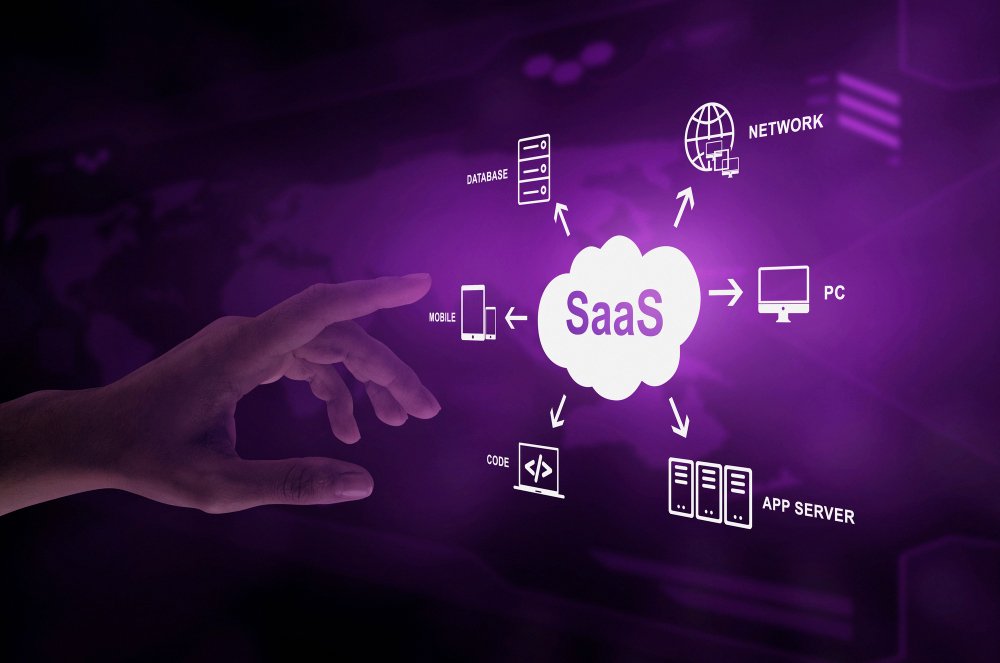
SaaS (Software as a Service) is software you rent. It’s hosted by someone else, accessed through a browser or app, and billed monthly or annually. Think of it like a subscription box where you pay monthly or annually, and in exchange, you get access to software hosted on someone else’s servers. You don’t own it, install it, or maintain it. You just log in and use it.
Think Slack, QuickBooks, HubSpot, Shopify, Zoom. The model has exploded because it has a lower upfront cost, fast setup, and you never have to worry about maintaining servers.
The global SaaS market was valued at roughly $408 billion in 2025 and is projected to exceed $1.25 trillion by 2034. That growth reflects how dominant subscription software has become for businesses of almost every size.
What Is Custom Software?
Custom software (also called bespoke software or custom-built software) is an application built specifically for your business from scratch, to your exact specifications.
That might mean custom mobile app development, custom web application development, an internal operations tool, an automated reporting system, or a customer portal. The defining characteristic is that the software is shaped around your business, not the other way around.
A SaaS vs Custom Software Development Cost Analysis
This is where most comparisons get it wrong. They compare the sticker price of SaaS offers to the upfront cost of custom development and call SaaS the cheaper option. That’s not the whole picture.
What SaaS Solutions Cost Over Time
Say you have a team of 20 people and you’re using a popular CRM at $50 per user per month. That’s $12,000 per year just for one tool. Add your project management platform, your accounting software solution, your marketing automation, and your customer support tool, and you could easily be looking at $30,000–$60,000 per year.

However, the kicker is that you own none of it. If the vendor raises prices (which they do), changes features, or shuts down the product, you’re stuck scrambling.
According to a 2024 analysis by Netguru, SaaS products now account for over 70% of all business software usage, but companies are increasingly running into the “subscription fatigue” problem, where accumulated monthly fees rival or exceed the cost of owning their own systems.
What Custom Software Costs
Custom software has a higher upfront cost; that’s a fact. Depending on complexity, a custom web or mobile application might range from $25,000 to $150,000+ to build. For most small businesses, that number is the first thing that makes them close the browser tab.
But the math changes if you consider the following:
- You pay once (or in milestones) and own the result permanently.
- There are no per-user subscription fees eating into your margins month after month.
- The software is built around your actual processes, so you get back time and efficiency that SaaS tools can’t deliver.
- As your business grows, you modify the software without switching platforms or paying for a new subscription tier.
Over a three-to-five year window, custom software often ends up cheaper than the accumulation of SaaS fees for businesses with more than 15–20 employees.
SaaS Tools vs. Custom-Built Software: Head-to-Head
| Factor | SaaS | Custom Software |
|---|---|---|
| Upfront Cost | Low (subscription) | High (one-time build) |
| Long-Term Cost | Accumulates over time | Lower once built & owned |
| Deployment Speed | Hours to days | Weeks to months |
| Customization | Limited (off-the-shelf) | Unlimited (built for you) |
| Scalability | Easy to scale up/down | Fully scalable by design |
| Data Ownership | Stored with vendor | You own everything |
| Maintenance | Handled by vendor | Your team or a dev partner |
| Security Control | Vendor-managed | You control every layer |
| Vendor Lock-in | High risk | No lock-in — you own the code |
| Best For | Startups, standard workflows | Unique processes, growing businesses |

The Factors That Matter for Small Businesses When Choosing Between SaaS and Custom Software Solution
1. How Unique Are Your Business Processes?
This is the first question to ask, and it’s probably the most important one.
If your workflows look more or less like every other business in your industry, SaaS will probably serve you well. A law firm that needs time tracking, billing, and document management? There are solid SaaS tools for that. A restaurant needing reservations and POS? Same story.
But if your business has processes that don’t fit neatly into existing tools and if you find yourself working around the software instead of with it, or duct-taping three platforms together to do something that should be one thing, that’s a signal that custom software would serve you better.
2. Where Are You Losing Time Right Now?
One of the most underrated benefits of custom software is automation of repetitive work. SaaS tools often automate generic tasks. Custom software can be built to automate the specific, time-consuming manual steps that are unique to your operation, the ones no off-the-shelf tool was designed to solve.
Before making any software decision, map out where your team is spending time on tasks that could theoretically be done automatically. That exercise alone often makes the case for custom development more clearly than any cost comparison.
3. How Sensitive Is Your Data?
When you use a SaaS application, your data lives on their servers, subject to their security practices, their compliance posture, and their privacy policies. For most small businesses, this is fine. But for businesses in healthcare, finance, legal, or any heavily regulated industry, this matters a lot.
Custom software lets you decide how data is stored, encrypted, and accessed, and you can build to HIPAA, SOC 2, GDPR, or whichever standards your industry requires.
4. How Fast Do You Need to Start?
If you need something working by next Monday, the SaaS platform wins. You can sign up for a tool today and have your team using it by tomorrow morning. That’s genuinely hard to compete with.
Custom software takes time, which is typically a few months from discovery to launch, depending on complexity. If you’re in early-stage testing, proving out a business model, or you need to move fast, SaaS is the right call for now.
That said, the decision doesn’t have to be permanent. Many businesses start with SaaS to move quickly, then transition to custom software once they’ve validated their workflows and hit the limits of the tools they’re using.
5. Are You Planning to Scale?
SaaS scales in one direction. If you need more seats, you need a higher plan. That usually means higher costs and, at some point, limitations in functionality or flexibility.
Custom software scales in any direction you need. You can add new features, integrate new data sources, automate new workflows, and expand without being constrained by a vendor’s roadmap or pricing model.
If you’re building a business that you expect to grow significantly, the software decisions you make today will either enable or limit that growth. Custom platforms tend to be a better foundation for businesses with big ambitions.

When SaaS is The Right Choice For You
We build custom software, so you might expect us to argue that everyone should do it. We don’t. SaaS is genuinely the better choice in a lot of situations.
- You’re early-stage and still figuring things out. If your processes are changing every few months, you shouldn’t be building custom software. You’ll end up rebuilding it when you figure out what you actually need. Use SaaS to stay flexible.
- The problem is standard and solved. Payroll software. Email marketing. Video calls. These are solved problems. Building a custom Zoom replacement would be insane. SaaS is fine.
- Cash flow is tight right now. A $500/month SaaS subscription and a $60,000 development project are not the same financial commitment. Sometimes the subscription is right for your business even if the long-term math doesn’t favor it.
- You need it to be live in two weeks. Custom software takes time to build properly. If the deadline is real, SaaS gets you there.
If the tool does what you need, then you don’t need more. Not every business has unusual processes. If the SaaS tool fits, use it.
When is Custom Software Worth It?
There’s a point where the calculus flips. Usually, it’s when one or more of these things are true:
- Your team is working around the software, not with it. When people are maintaining spreadsheets alongside the system, exporting CSVs to do things the tool should handle, or just “doing it manually” because the tool can’t, that’s the software not fitting the job.
- You’re growing fast, and per-user pricing is starting to hurt. SaaS pricing that felt fine at 15 users feels very different at 75. Custom software just… doesn’t have that problem. You own it.
- You’re in a regulated industry. In healthcare, legal, and financial services, your client data being sent to a third-party vendor’s servers creates compliance exposure. With custom software, you have full control over where data lives and what standards it’s held to.
- The software is part of what makes your business different. If your core process is something that sets you apart from competitors, running it on the same SaaS tool your competitors can also subscribe to isn’t a great strategy. A custom-built solution around that process becomes a real advantage.
The Hybrid Approach: You Don’t Have to Choose One Completely
You don’t have to go all-in on either model. Many of the most effective small business tech setups use both.
A common pattern we usually see is that most small businesses use proven SaaS tools for generic functions (email, video conferencing, payroll), and build custom software for the parts of their business that are genuinely unique and core to how they compete.
For example, a logistics company might use Slack for team communication and QuickBooks for accounting, but have a custom dispatch and route optimization tool built specifically for their operations, because nothing off-the-shelf handles their specific delivery model.
The question isn’t always “SaaS or custom?”, sometimes it’s “where does custom give us the most leverage?”
SaaS or Custom Software: A Decision Framework for Your Situation
Rather than a rigid checklist, work through these questions honestly. The pattern of your answers will point clearly in one direction.
| Question | Points to SaaS | Points to Custom Software |
|---|---|---|
| Can a standard SaaS tool handle 80%+ of what you need? | Yes | No |
| Do you need to be operational within the next few weeks? | Yes | No, you have runway to build |
| Are your core workflows the same as most businesses in your industry? | Yes | No, they are genuinely different |
| Are your monthly SaaS costs already exceeding $2,000? | Not yet | Yes |
| Do you operate in a regulated industry with strict data requirements? | No | Yes |
| Are you still testing your business model and core processes? | Yes | No, your processes are established |
| Will you have more than 50 people on this software within three years? | Not likely | Yes, scaling is certain |
| Do integrations with your existing systems present serious challenges? | No, connectors exist | Yes, nothing connects cleanly |
Choosing a Development Partner: What to Look For
If this analysis leads you toward custom software, the decision you make next, choosing who builds the custom software for your business, determines whether the project succeeds. The quality of the outcome depends almost entirely on the quality of the firm you hire.
Working with small and mid-size businesses across North America for over a decade, we have seen the same failure patterns repeat. Vague project timelines that expand indefinitely. Development firms that take a deposit and then go quiet for weeks. These outcomes are almost always preventable, and they almost always trace back to a flawed development process rather than technical incompetence.
A software development partner worth hiring will do a few specific things before they build anything. They will run a structured discovery phase to understand your requirements in detail, produce wireframes and technical specifications, and give you a clear picture of exactly what they are building.
At Paracon, this is the process we have followed for every project since 2012. Discovery first. Fixed-price proposal. Milestone delivery. Post-launch support. The businesses we work with are small and mid-size companies across North America, many of them in industries where generic software never quite fits.
We will also tell you honestly if SaaS makes more sense for your situation than a custom build. A good development firm knows that the best client relationship starts with the right advice, not the most expensive project.
So Which Is It?
The honest answer is: it depends, and that’s not a cop-out.
SaaS is genuinely the right choice for a lot of businesses, for a lot of use cases.
Custom software is worth the initial investment when your processes are genuinely unique and when you’re scaling fast enough that per-user licensing is becoming painful.
If you’re genuinely uncertain, talk to someone who’s been in enough of these situations to give you a real read.
As a growing custom software development agency, Paracon offers free consultations for this kind of decision. If SaaS is the better answer for you, we’ll tell you that. If custom software development services make sense, we can walk through what that looks like. Book a time with Paracon now.